By Simon Royer, REALTOR® at RE/MAX Icon Realty
Every summer I get some version of the same text. Someone spent a weekend at a friend's place on the water, had two coffees on a dock at 7am, and texted me "ok I think we need a cottage." I love that text. I also have to be the one who tells them a cottage is not just a house that happens to be near water. The rules change, the numbers change, and the timeline moves slower than they expect.
Here's what actually shifts when you go from buying a house to buying a recreational property, and why the first real step probably isn't the cottage listing at all.
Your Down Payment Depends on What Kind of Cottage It Is
This is the part almost nobody explains up front, and it's the one people get most wrong. Lenders split cottages into two categories, and which one yours falls into decides your down payment before you even talk about price.
Type A cottages are basically second homes. Full foundation, four season insulation, potable running water, year round road access that gets plowed. If your cottage checks those boxes, you can often finance it the same way you would a regular second home, as little as 5% down on the first $500,000 and 10% on the portion up to $999,999.
Type B cottages are the rustic version. Seasonal, maybe boat access only, water that isn't necessarily safe straight from the tap. These still qualify for financing in most cases, but usually with a minimum 10% down and a lower cap on what a lender will approve.
Buy raw, unserviced land with no structure at all, and you're usually looking at 50% down, sometimes less for a strong waterfront lot, but don't count on it.
None of this is something you want to discover after you've already fallen for a listing. Talk to a mortgage broker who actually handles recreational properties before you start touring.
The Airbnb Plan Needs a Reality Check First
A lot of buyers assume the cottage can quietly pay for itself on Airbnb when they're not using it. Worth knowing before you build that into your budget: a growing number of Ontario townships now license short-term rentals, and several tie your maximum guest count directly to your septic system's certified capacity, not to how many beds you can physically fit in the place. Exceed it, and you risk fines, a shut-down rental, or a septic system failure that costs far more than the income was worth.
This varies a lot by municipality, some have detailed licensing programs already, others haven't gotten there yet, so this is very much a "check the specific township" situation, not a province-wide rule. If short-term rental income is part of your plan, find out what that specific municipality actually allows before you write an offer, not after.
Worth knowing too: if you're financing under standard second home rules, the property generally needs to be for your own use, or a family member's, rent free, for at least part of the year. Full-time rental use puts you into a different financing category entirely, with different rules and a bigger down payment.
You Might Not Own the Shoreline You Think You Do
Just because a cottage sits on the water doesn't automatically mean you own the beach in front of it. Some shoreline in Ontario is Crown-owned or covered by a road allowance, which affects what you can actually build, whether that dream dock is even yours to put in. Worth confirming before you start planning anything permanent near the water.
You Might Not Need to Drive Three Hours
Here's the part I actually want people thinking about first, before Muskoka, before Haliburton. If you're in Brantford, Cambridge, or Kitchener-Waterloo, your closest real cottage country is Lake Erie, and it's a lot closer than most people assume.
Port Dover, Turkey Point, Long Point, Selkirk. Thirty to forty five minutes from Brantford, most of it. Beach access, boating, a genuinely different pace, without burning half your Saturday just getting there. It will never have the name recognition of Muskoka, and honestly that's part of the appeal. Less competition, more reasonable prices, and you can actually use it on a random Tuesday evening instead of only on long weekends.
See what's currently listed on the water
Here's the Part Most People Skip
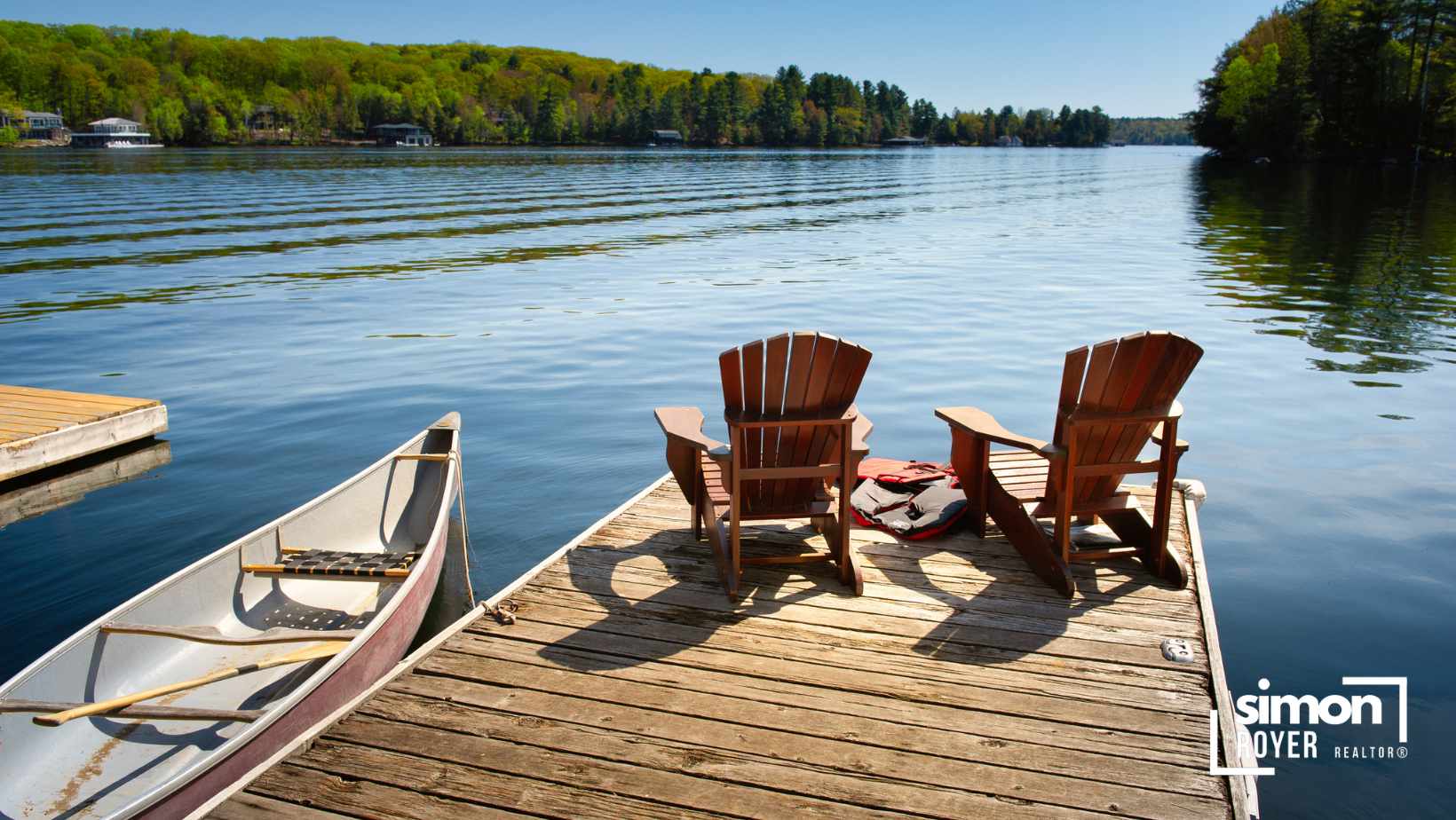
If you're sitting on the dock this July dreaming about making a cottage a permanent reality, the first real step isn't browsing listings. It's knowing exactly how much buying power is already sitting in the home you own right now. Most cottage purchases start with equity from the primary residence, whether that's a straight sale, a refinance, or a bit of both.
Drop your address in below and find out what your home is actually worth in today's market. Takes two minutes, no waiting, no pressure.
Frequently Asked Questions
Do I need a bigger down payment for a cottage than a regular house? It depends on the type of cottage. A winterized, four season property with year round access can qualify for the same down payment rules as a regular second home, as little as 5% on the first $500,000. A seasonal or rustic property usually needs at least 10% down, and raw land is typically 50%.
Can I use my cottage as an Airbnb to help pay the mortgage? Maybe, but check your specific township first. A growing number of Ontario municipalities license short-term rentals and cap occupancy based on your septic system's certified capacity, not bedroom count. Rules vary a lot by location, so confirm before you buy, not after.
Do I own the shoreline in front of my cottage? Not always. Some Ontario shoreline is Crown-owned or covered by a road allowance. Confirm shoreline ownership before making any plans for a dock or permanent structure near the water.
Is Lake Erie actually a good alternative to Muskoka? For anyone based in Brantford, Cambridge, or Kitchener-Waterloo, yes. Port Dover, Turkey Point, and Long Point offer real waterfront living thirty to forty five minutes away, without the drive time or price premium that comes with Muskoka's name recognition.
Simon's Final Word
A cottage is one of those purchases where the fun part, imagining yourself on that dock, happens a long time before the practical part, proving to a lender the water is safe to drink. Both parts matter. Get the financing conversation out of the way early, know what your current home is actually worth, and you get to spend your time actually enjoying the water instead of getting soaked by something you didn't see coming.
Book a free call with Simon | Get a free home evaluation | First Time Buyer Resources
This blog post reflects the personal opinions and professional experience of Simon Royer, REALTOR® at RE/MAX Icon Realty. Not intended to solicit buyers or sellers currently under contract. RE/MAX Icon Realty Brokerage, 33-620 Davenport Rd, Waterloo ON N2V 2C2
Check out this article next