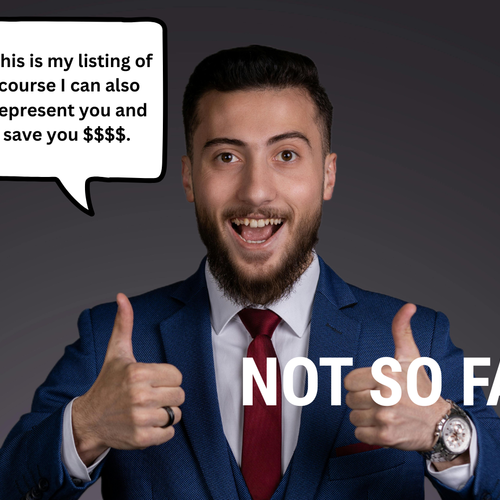

By Simon Royer, RE/MAX Icon
In Ontario’s real estate market - especially across the GTA, Kitchener–Waterloo, Guelph, Brantford, and Hamilton - buyers and sellers are constantly being pitched one idea:
“Why pay full commission when you can get cash back?”
On the surface, cash-back real estate sounds appealing. A rebate of $5,000, $10,000, or even more can feel like an instant win in an already expensive transaction.
But as someone who works in this market every day, I can tell you this clearly:
👉 Choosing an agent or brokerage based primarily on cash back is often a short-term decision with long-term financial risk.
Let’s break down why.
1. Cash Back Is a Marketing Tactic - Not a Performance Advantage
Cash-back real estate exists mainly as a price-based marketing strategy, not a value-driven service model.
Agents who lead with rebates are competing on commission discounts, not:
Negotiation strength
Market knowledge
Deal structuring
Risk management
In most cases, cash-back agents rely on high transaction volume to make the numbers work. That usually means:
Less time per client
More standardized advice
Fewer customized strategies
Top-performing agents don’t need to discount themselves. Their value shows up where it matters most - in the outcome of the deal, not the rebate headline.
2. Negotiation Mistakes Cost More Than Any Rebate
Here’s the math most people overlook.
If a cash-back agent:
Misses $15,000–$25,000 in negotiation leverage
Overlooks inspection or financing protections
Fails to push back on unfavourable closing terms
You’ve already lost far more than the rebate you received.
Strong representation focuses on net result, not gross savings.
The goal isn’t “How much did I get back?” - it’s:
“How well was my position protected and optimized?”
3. Ontario-Specific Risk: Strategy Matters More Than Ever
Ontario is not a simple real estate market. Between:
Rapid price shifts
Multiple-offer scenarios
Appraisal gaps
Financing rule changes
Local zoning and resale issues
A one-size-fits-all approach can be dangerous.
Cash-back models often lean on automation and speed. But real estate success here depends on:
Micro-market pricing strategy
Offer positioning
Timing and leverage
Knowing when not to make a deal
Those decisions require experience - not shortcuts.
4. The HST Reality Most Cash-Back Ads Don’t Explain
This is critical, and it’s often glossed over.
In Ontario, real estate commissions are subject to HST (13%). When a buyer receives cash back from an agent:
The rebate is technically part of the commission
The HST implications must be handled correctly
Depending on how the rebate is structured:
You may receive less net cash back than advertised
There can be tax reporting considerations
Improper handling can create compliance issues
In short:
💡 That “$10,000 cash back” isn’t always $10,000 in your pocket.
A full-service agent ensures everything is:
Transparent
Properly documented
Fully compliant with Ontario regulations
Cutting corners here can expose buyers and sellers to unnecessary risk.
5. Volume-Based Models Mean You’re Not the Priority
Most rebate-based agents must handle a large number of clients at once.
That often leads to:
Slower response times
Delegation to assistants
Less proactive guidance
Minimal post-closing support
When problems arise - and they often do - you want an agent who:
Answers the phone
Knows how to solve complex issues
Will aggressively advocate for you
You don’t want to be one file among fifty.
6. First-Time Buyers and Sellers Are the Most Vulnerable
Cash-back offers attract price-sensitive clients - often first-time buyers and sellers.
Ironically, these are the people who need:
The most education
The most protection
The clearest guidance
A rebate can feel like a win - until:
You buy a property with resale issues
You miss future value appreciation
You inherit costly surprises
Experience isn’t cheap - but mistakes are far more expensive.
7. After the Closing, Support Often Disappears
Another overlooked issue is post-sale accountability.
Once a cash-back deal closes and the rebate is paid:
Many agents move on immediately
Ongoing support is limited
Complex post-closing issues become your problem
Real estate doesn’t always end cleanly at possession. Strong representation includes support beyond closing, not just up to it.
Simon’s Final Word
Cash-back real estate isn’t inherently wrong - but it should never be the main reason you choose representation.
In Ontario, where:
Every negotiation matters
Every clause carries risk
Every dollar compounds over time
Your agent’s job is not to be the cheapest -
It’s to protect your position, maximize your outcome, and guide you through one of the biggest financial decisions of your life.
A short-term rebate can look attractive.
But real value shows up in:
Better pricing
Stronger terms
Reduced risk
Long-term confidence
Cheap representation often ends up being the most expensive choice.
Check out this article next